
Parole vs Probation in Fayette County
Parole and probation both involve supervision, but they begin in different ways. Parole is tied to release from prison under Alabama Bureau of Pardons and Paroles authority. Probation is court-ordered supervision that may follow a Fayette County court case. Fayette County Jail can also hold people on parole or probation holds, so a jail release may mean a hold was lifted, supervision was reinstated, or the person was transferred for further action.
| Topic | Parole | Probation |
|---|---|---|
| Source | ABPP and state-prison release process. | Court order and local supervision process. |
| Common release issue | Parole grant, denial, hold, or revocation. | Probation order, violation, or reinstatement. |
| Main record | ABPP hearings, results, minutes, field office. | Fayette court records and supervision office. |
| Jail link | Parole hold or transfer may affect custody. | Probation hold may bring a person to jail. |
Fayette Field Office Supervision
The county-specific source is the ABPP Fayette Field Office. It serves Fayette County and provides the local route for supervision questions that are not answered by statewide hearing records. Statewide ABPP pages still matter because parole hearings, cancellations, results, and minutes are published centrally.
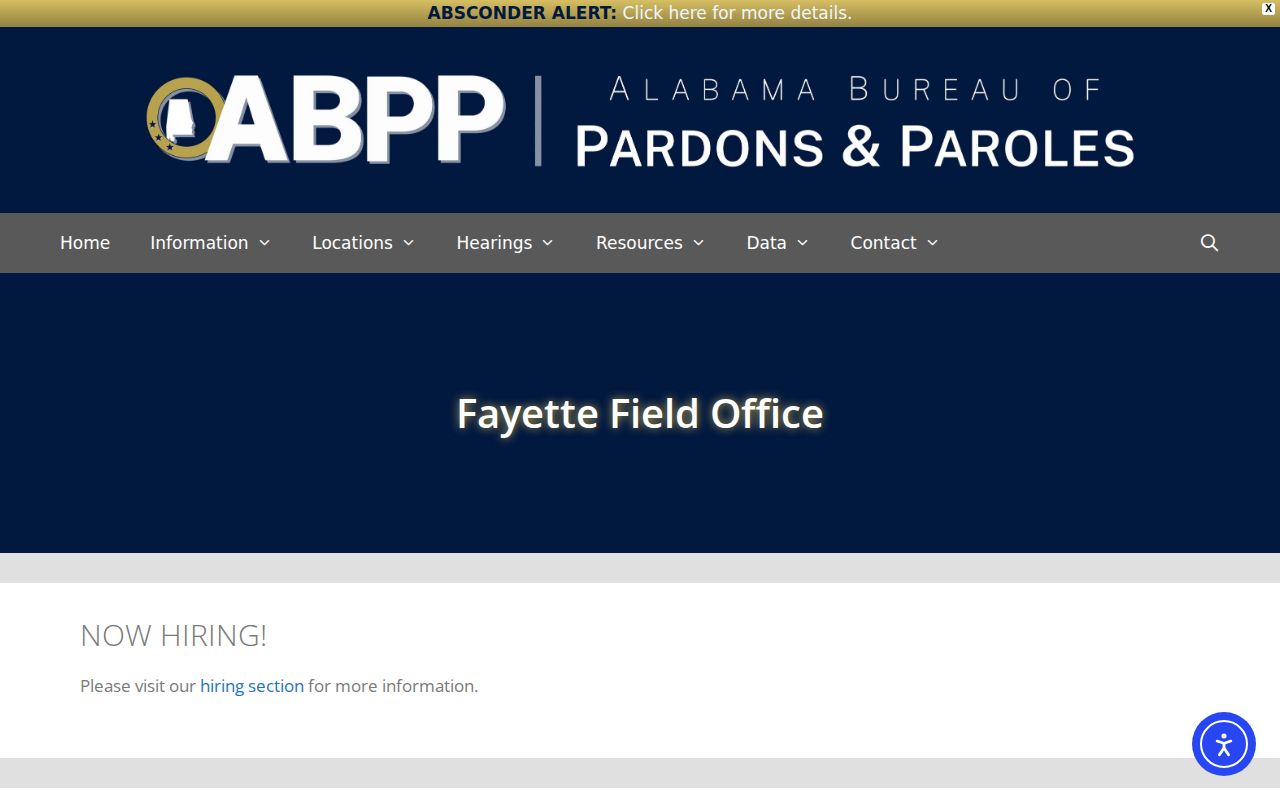
Fayette Field Office: Alabama Bureau of Pardons and Paroles, 110 Columbus St. E., Fayette, AL 35555, 205.512.0796, fax 205.932.2087, Monday through Friday, 8:00 a.m. to 4:30 p.m.
The field office source below confirms the local supervision contact.
Verify Fayette Post-Release Supervision
Verification should begin with identity matching. ABPP hearing records use AIS numbers, names, dates, hearing type, and county of conviction. Fayette court records may use case numbers, party names, charge labels, orders, and revocation entries. A sheriff feed entry may have a booking number and booking date but no supervision status.
- Match the person by name plus AIS number, case number, booking number, or other lawful record detail.
- Check ABPP scheduled hearings, cancellations, current-year results, previous-year results, and minutes.
- Confirm whether the person is still in jail, transferred, or released to supervision.
- Use Fayette court records for probation orders, revocation entries, or sentence terms.
- Contact the Fayette Field Office for local supervision routing when the public record does not answer the question.
Parole Hearings Are Not Release
ABPP's general hearing page says parole and pardon hearings normally occur in open public meeting on Tuesday, Wednesday, and Thursday unless noted. It also says the inmate is not present for a parole hearing and that the Board's decision is announced at the conclusion of the hearing. A scheduled hearing means a matter was set. It does not mean release happened.
Release check: Scheduled hearings show a parole matter; results show Board action; actual custody or supervision status may still need ADOC, ABPP, jail, or court confirmation.
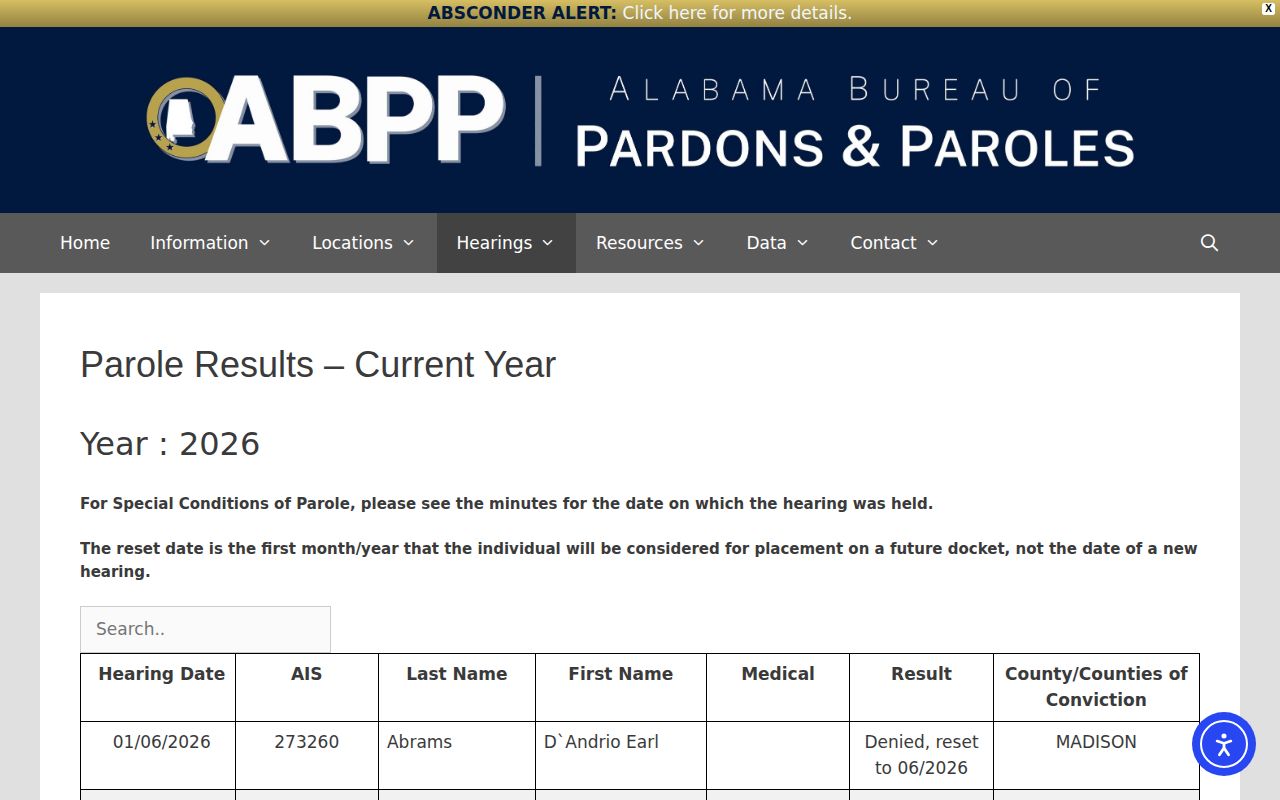
The current-year parole results source provides result data that is more direct than a schedule.
Holds, Violations, and Absconders
Fayette County Jail can house parole or probation holds. A hold can keep a person in custody even when another case seems ready for release. A hold lift can let the jail release the person while supervision continues. A revocation can lead to custody or transfer. ABPP absconder alerts are relevant only when a supervised person is alleged to have stopped reporting; they are not a general release list.
- Hold
- A custody restraint tied to supervision, a warrant, or another agency request.
- Revocation
- A process that can change supervision after an alleged violation.
- Reinstatement
- A return to supervision instead of continued custody.
- Absconder
- A status used when a supervised person is alleged to have stopped reporting.
How Fayette Supervision Ends
Supervision can end by discharge, court order, Board action, sentence expiration, revocation outcome, or a later custody event. A person can be released from Fayette County Jail and still remain under ABPP or court supervision. Conversely, a person can be transferred from jail after a hold or revocation rather than released to the community. For the full jail release record and source map, use the Fayette County released inmates home coverage on Home.
| Event | Likely source | Careful wording |
|---|---|---|
| Hold lifted | Jail, ABPP, court record. | Released from jail custody, supervision may continue. |
| Parole granted | ABPP result plus ADOC/jail confirmation. | Parole granted, release timing confirmed separately. |
| Probation order changed | Fayette court record. | Court action changed supervision. |
| Absconder alert | ABPP alert. | Supervision alert, not a release log. |
Fayette Court Probation Records
Probation supervision often starts or changes through court action. Fayette court records may show probation terms, revocation petitions, reinstatement, sentence changes, or orders that affect jail custody. The Circuit Clerk and AlaCourt path should be used for the court authority behind a probation-related release, while the jail record confirms whether the person physically left Fayette County Jail.
This distinction matters when a person was booked on a probation hold. A release from jail may mean the hold was lifted, the person was reinstated to supervision, the court modified conditions, or the case was reset. It does not automatically mean supervision ended. Use discharge only when the record actually shows supervision ended.
ABPP Results and Minutes
ABPP result tables are more useful than schedules when the question is whether parole was granted, denied, continued, or otherwise resolved. Minutes may add conditions or context that the result table does not fully explain. The Fayette Field Office is important for local supervision routing, but the hearing decision remains a statewide ABPP record. When exact custody timing matters, pair ABPP records with ADOC or jail records.
Fayette Supervision Source Conflicts
Supervision records can appear to conflict when they are answering different questions. A Fayette jail record may show a person released from local custody, while ABPP still shows parole supervision. A court docket may show probation reinstated, while the sheriff feed no longer shows the person. A parole hearing result may show a Board decision, while ADOC or jail records are still needed to confirm the actual custody movement.
Resolve those conflicts by ranking the source for the event. Use the jail for physical Fayette County Jail custody. Use the court for probation orders and case authority. Use ABPP for parole decisions, absconder alerts, and local supervision routing. Use ADOC for state-prison custody. If the event is discharge from supervision, look for a record that actually uses that concept or clearly shows supervision ended. Do not infer discharge from a missing jail listing.
Fayette Release Terms
Parole, probation, hold, revocation, reinstatement, absconder, and discharge are not interchangeable. A parole grant can lead to supervised release from prison. Probation can follow a court sentence without prison release. A hold can keep a person in jail until the supervising authority or court acts. Revocation can return a person to custody. Reinstatement can return a person to supervision. Discharge means the supervision status itself has ended.
Fayette Final Source Check
Before a release statement is final, compare the record against the agency responsible for the event. The sheriff feed is useful for public display, but the jail record confirms local custody processing. Court records explain the legal authority. ADOC records explain state-prison custody. ABPP records explain parole decisions and supervision. BOP and ICE records apply only when those systems are involved.
If the sources do not line up, do not force one conclusion. State what each source says and which event it controls.